
 English
  Tiếng Việt
Translation machine technology is becoming increasingly popular and an indispensable tool in fields such as tourism, education, international trade, and daily communication. However, a big question remains: can translation machines achieve absolute accuracy? This article will deeply analyze the actual capabilities of translation machines, user expectations, and factors affecting translation quality.
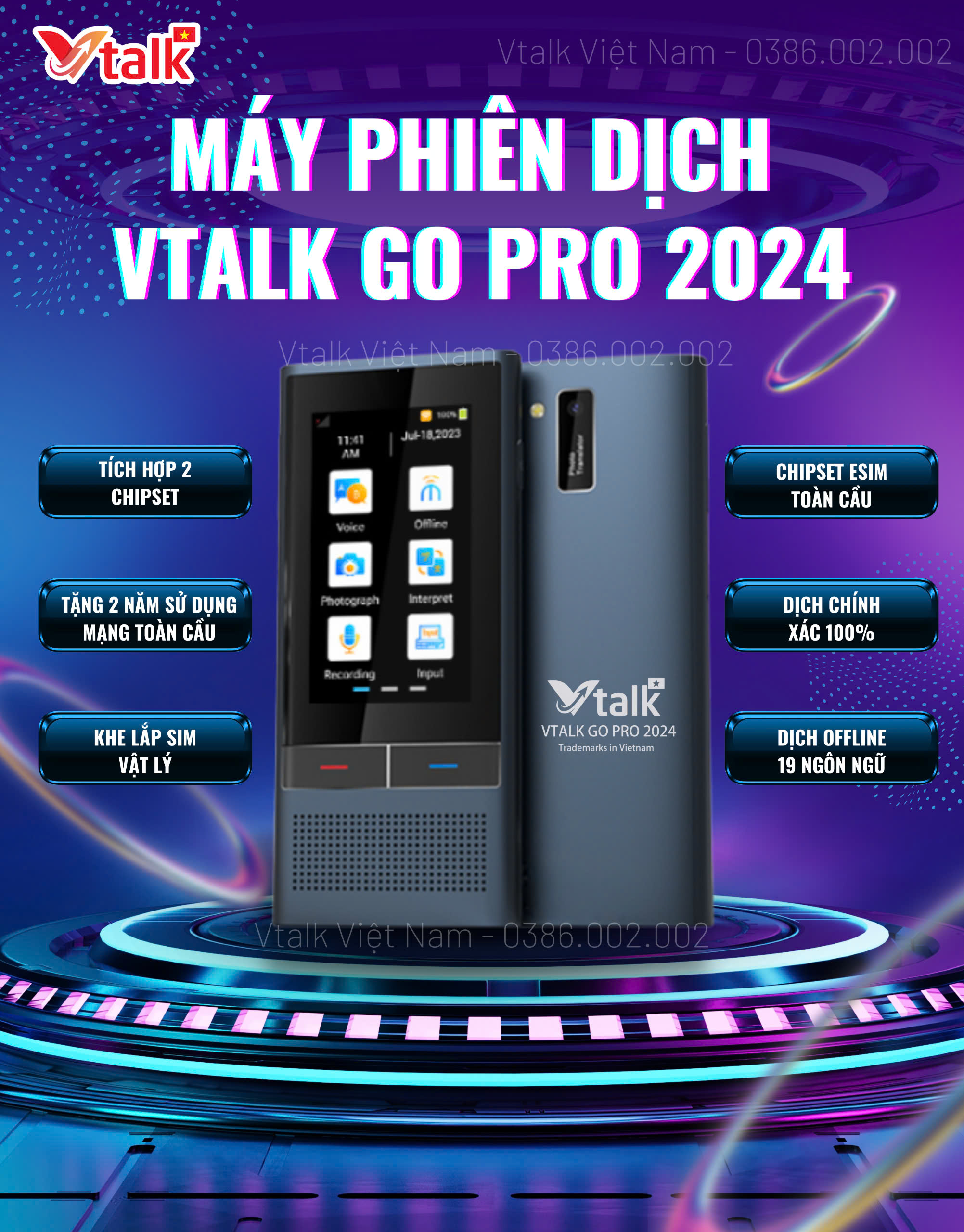
VTALK GO PRO is the most accurate translation machine currently available.
1. Understanding Translation Machines and How They Work
What is a Translation Machine?
A translation machine is a device or software that uses artificial intelligence (AI) and natural language processing (NLP) technology to translate language from one form to another, including both text and speech translation.
Operating Principle
Translation machines rely on:
- Artificial Intelligence (AI): To understand the context and content of the speech.
- Machine Learning: Trained on vast linguistic data to improve accuracy over time.
- Speech Recognition: Converts speech into text for processing.
- Reverse Language Translation: Based on pre-programmed language pairs to translate content.
Although this technology has developed by leaps and bounds, limitations still exist, preventing it from reaching "absolute accuracy."
2. The Reality: How Accurate Are Translation Machines?
Current Accuracy
Current translation machines, such as Google Translate, DeepL, or devices like Pocketalk, achieve an accuracy of about 80-95% in normal communication situations. However, this accuracy depends on many factors:
- Source and target languages:Common language pairs like English-French or English-Spanish are often more accurate than less common pairs like Vietnamese-Hausa.
- Context:Translation machines often struggle with ambiguous sentences or those containing idioms and slang.
- Tone and dialect:Local accents or dialects can cause confusion during the recognition and translation process.
Areas Where Translation Machines Perform Well
- Basic communication:Simple sentences like "I want to buy a train ticket" are usually translated accurately.
- Technical translation:In specialized fields with standardized vocabulary such as information technology or engineering, translation machines perform quite well.
Areas Where Translation Machines Have Limitations
- Literary texts:Artistic, emotional language is very difficult to translate with the correct tone and meaning.
- Commercial and legal:Highly specialized language, such as in legal contracts, requires high accuracy and deep contextual understanding.
3. Expectations Versus Reality
User Expectations
Users often expect translation machines to:
- Achieve 100% accuracy in all situations.
- Understand the context and deep meaning of statements.
- Completely replace human interpreters.
Can Reality Meet Expectations?
Although technology has improved, achieving absolute accuracy remains a major challenge because:
- Language is a complex system, carrying multiple layers of meaning and influenced by culture.
- Emotions and underlying meanings in communication are difficult for machines to fully recognize.
- Languages are constantly evolving with the emergence of new words and idioms.
4. Factors Affecting the Accuracy of Translation Machines
Language Data
The quality and quantity of language data used to train translation machines play a crucial role. Languages with fewer reference materials will find it difficult to achieve high accuracy.
Context
Translation machines struggle when analyzing broad or complex contexts, such as conversations interwoven with multiple topics.
Slang and Idioms
Local slang or idioms often do not have a literal meaning and require cultural understanding to be translated accurately.
Advancements in AI
Artificial intelligence is becoming smarter, but still has limitations when understanding and processing emotional aspects or specific intonations in language.
5. The Future: Can Translation Machines Achieve Absolute Accuracy?
Potential for Improvement
- Deep Learning:AI can learn from larger amounts of data, helping to gain a deeper understanding of context and semantics.
- Integration of Cultural Data:Integrating cultural knowledge can help translation machines improve accuracy.
- Development of AR and VR Technologies:These technologies can help translation machines provide more visual and contextually relevant results.
Limitations
Despite the potential for improvement, achieving absolute accuracy in translation is very difficult because:
- Language constantly changes over time.
- Machines cannot completely replace human sensitivity and creativity.
6. The Role of Humans in the Era of Translation Machines
Despite the development of translation machines, humans still retain an irreplaceable role:
- Editing and quality control:Humans will ensure the final translation is accurate and contextually appropriate.
- Content creation:Fields such as writing, advertising, and culture require creative abilities that machines cannot possess.
- Emotional communication:In situations requiring sensitivity and empathy, humans remain the key factor.
7. Conclusion
Machine translators have made great strides in facilitating multilingual communication. However, absolute accuracy is a challenging goal due to the complexity of language and context. In the future, machine translators will continue to improve, but the role of humans cannot be completely replaced.
The combination of technology and humans will be the optimal solution, bringing high efficiency in translation and global communication. Use machine translators as a support tool, but do not forget that human understanding and insight are the keys to successful communication.