
 English
  Tiếng Việt
 In the context of globalization and the strong development of technology, translation devices have become an important support tool in connecting people from different cultures and languages. So what does the future hold for translation devices? What trends and potentials await this market? The article below will delve into analysis and predictions to provide a comprehensive view.
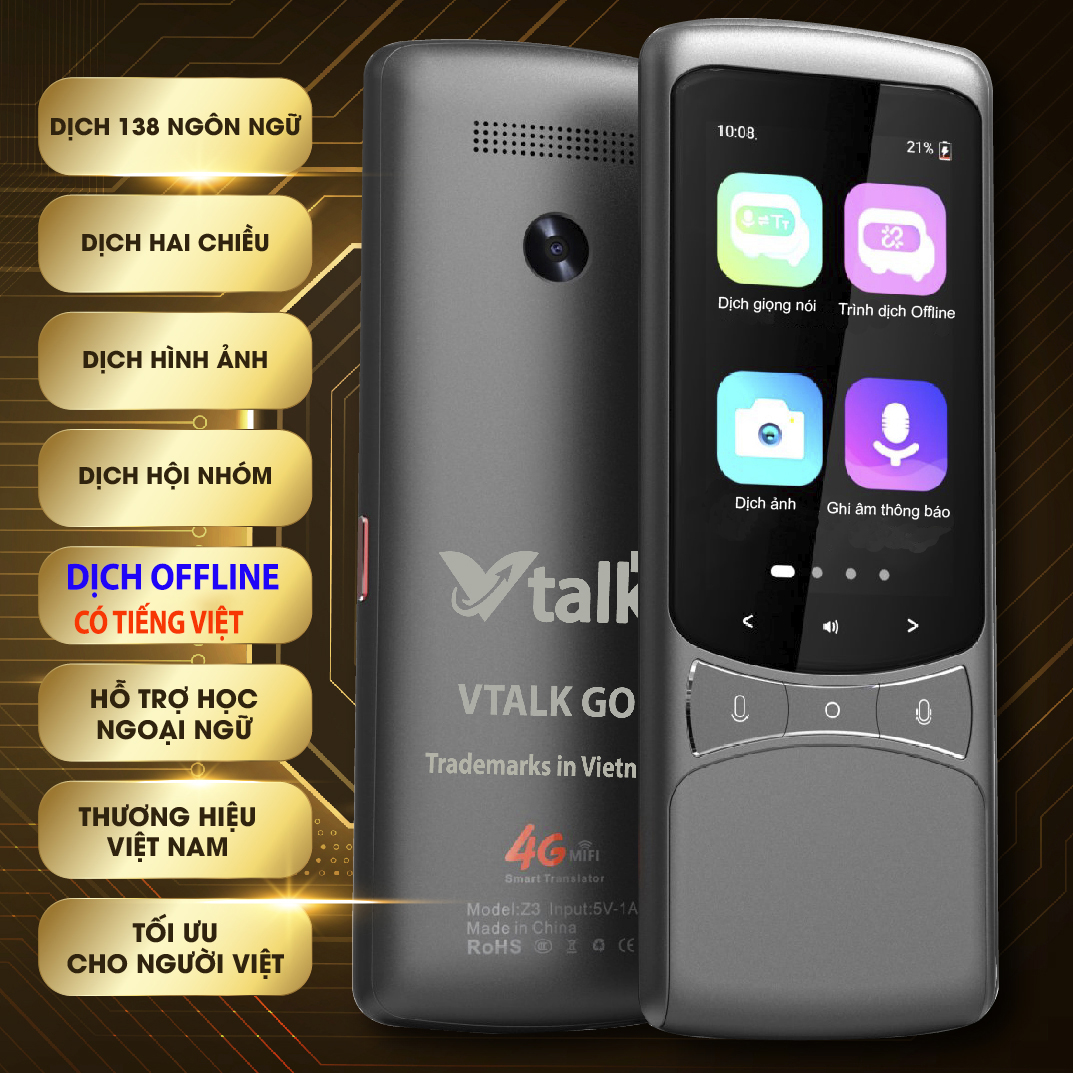
Vtalk Go is one of the best-selling devices today
1. Translation Devices: Development Drivers from Practical Demands
In the 21st century, the demand for cross-border communication is increasing. Fields such as tourism, trade, education, and healthcare all require the support of translation technology:
- International tourism: Tourists from all over the world need devices that can translate instantly to easily communicate with locals.
- Global trade: Businesses need translation devices to ensure efficiency in international negotiations and cooperation.
- Education and research: Learning and academic exchanges between countries require accurate language translation solutions.
- Healthcare: In emergency situations, the ability to accurately understand and express language is crucial.
These drivers are the foundation for the continuous development of translation devices.
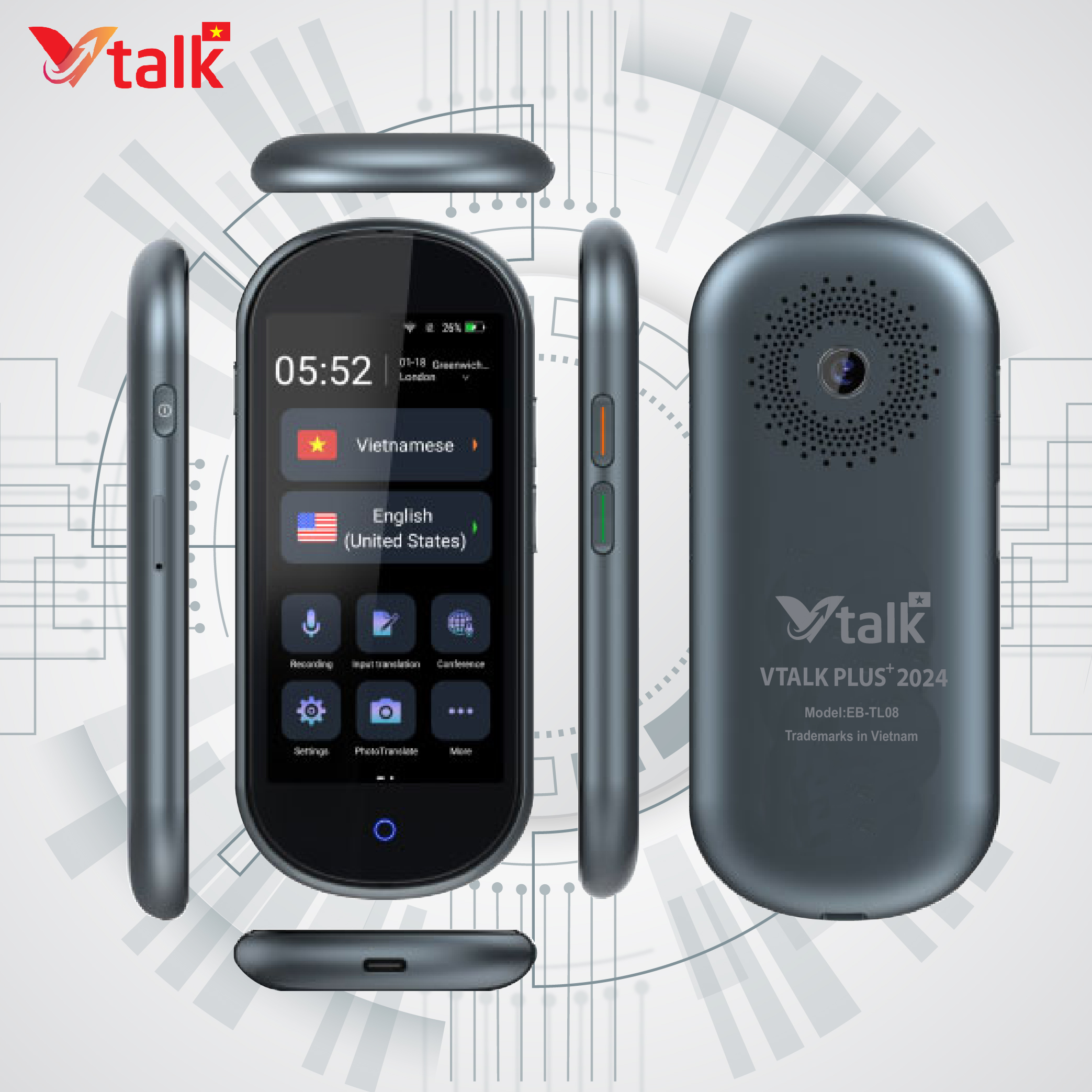
VTALK PLUS TOP QUALITY combined with artificial intelligence
2. Technology Trends in Translation Devices
Translation devices have advanced further thanks to the combination of artificial intelligence (AI), machine learning, and other advanced technologies. Here are the prominent trends:
Artificial Intelligence (AI) and Deep Learning
AI algorithms are becoming smarter, allowing translation devices to understand and translate languages naturally, almost like humans. Deep learning helps improve accuracy by analyzing large amounts of data, recognizing context and emotions in language.
Real-time Voice Translation
Speech processing technology has made great strides, allowing language translation as the speaker is talking. This is very useful in online meetings, international conferences, and daily communication.
Wearable Technology
Translation devices integrated into wearables like smart headphones are becoming increasingly popular. These devices are not only convenient but also provide a seamless translation experience.
Applications of AR and VR Technology
In the future, translation devices may be combined with virtual reality (VR) and augmented reality (AR) to provide multi-dimensional communication experiences. For example, when wearing AR glasses, users can see translated text directly on the glass screen.
3. Market Potential of Translation Devices
Strong Growth
The translation device market is expected to reach billions of USD in the next decade. According to research reports, the demand for translation devices will grow at a compound annual growth rate (CAGR) of over 10% due to the development of international trade and tourism.
Regional Market
- Asia: With a large population and diverse languages, this region has the greatest demand for translation devices, especially in China, Japan, and India.
- Europe: As a hub for international conferences, the European market is also a major driver for this industry.
- North America: Major technology companies in the US and Canada are leading the research and development of translation devices.
Related Industries
Industries such as aviation, hospitality, online education, and healthcare all have great potential to integrate translation devices, creating a synchronized technological ecosystem.
4. Challenges and Solutions
Challenges
- Accuracy in Complex Contexts:Machine translation still struggles with languages that have complex structures or many idiomatic expressions.
- Data Security:Language processing requires the collection of personal data, raising privacy concerns.
- High Cost:High-quality products are still quite expensive, inaccessible to the majority of users.
Solution
- Integrate more linguistic corpora to improve accuracy.
- Implement strict security standards.
- Lower product costs through large-scale production and process optimization.
5. The Future of Translation Machines
In the future, translation machines will not only stop at language translation. They will become an indispensable part of the technology ecosystem, integrating with fields such as:
- IoT (Internet of Things):Translation machines can connect with smart devices to provide a comprehensive interactive experience.
- Data Analysis:Language data can be analyzed to better understand user trends, habits, and culture.
- Multimedia Support:In addition to spoken and written language, translation machines will support the translation of images, symbols, and other forms of non-verbal communication.
Conclusion
Machine translation is not just a technological device, but also a cultural and linguistic bridge, opening the door to global communication. With the advancement of technology and market development potential, machine translation will continue to change how people interact and work in an increasingly connected world. This is an opportune time for investors, businesses, and consumers to leverage this trend and prepare for a future of borderless communication.