
 English
  Tiếng Việt
In the era of globalization, the demand for multilingual communication is constantly increasing. Translator device– with fast and convenient translation capabilities – has become one of the important technological devices supporting connections between languages and cultures. The development of artificial intelligence (AI), machine learning (Machine Learning), and big data (Big Data) is shaping the future of the interpreter machine market. This article will provide a detailed overview of future interpreter machine technology and market trends.
Technology trends of translation devices
Integration of Artificial Intelligence (AI)
- Deeper contextual understanding: AI helps translation devices not only translate words but also understand the context and nuances of speech.
- Machine learning: Devices will learn from user habits, improving accuracy during use.
- Practical applications: Models such as Key features: and Vtalk have integrated AI to enhance translation performance.
Real-time translation technology
- Faster translation: In the future, translation devices can translate instantly without delay, making communication more natural.
- Simultaneous translation technology: Simultaneous translation devices are becoming increasingly popular, providing better support for international meetings and events.
Advanced voice technology integration
- Automatic Speech Recognition (ASR) technology: Helps the translation device recognize and differentiate speech in noisy environments or with multiple speakers simultaneously.
- Voice synthesis: Recreates the user's voice in another language, preserving the original tone and emotion.
Offline translation support
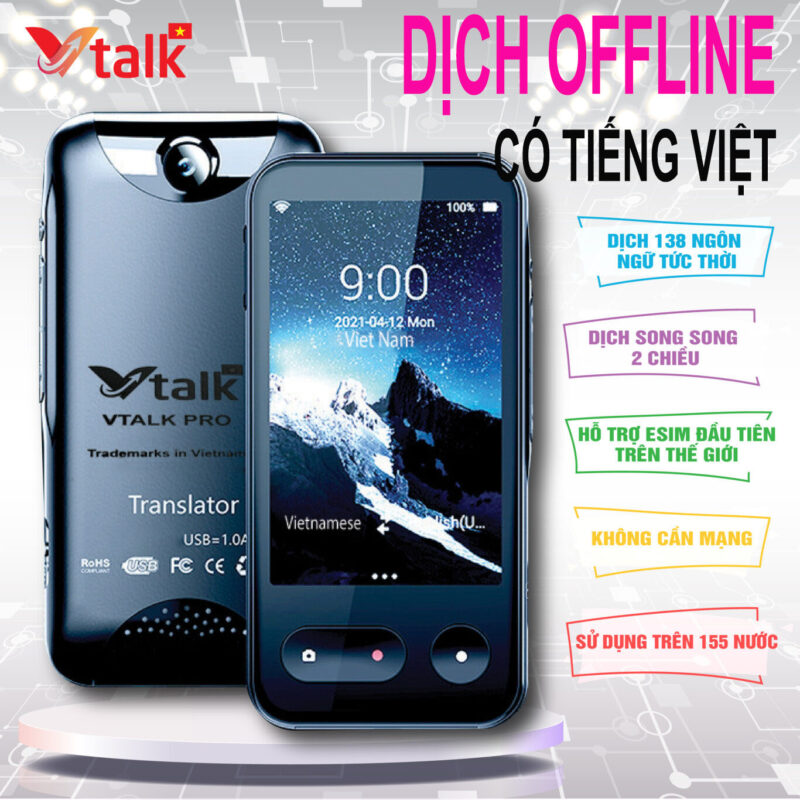
- Offline translation capability: With advancements in software and hardware, translation devices will support offline translation without an internet connection, especially useful in areas without network coverage.
IoT technology integration
- Multi-device connectivity: Translation devices will become part of the IoT ecosystem, connecting with phones, tablets, and other smart devices.
Multimedia translation technology
- In the future, translation devices will be capable of translating video and images, providing better support for learning, business, and entertainment.
Translation device market trends
Increased demand in emerging markets
- Asia and Africa regions: With economic and tourism growth, these regions will have a higher demand for translation devices.
- Applications in education: Developing countries will use translation devices as a tool to support foreign language learning and global communication.
Expanded Customer Base
- Individual Users: Tourists, language learners, and people working at multinational companies.
- Businesses: Use translation devices in meetings, business negotiations, and international events.
Development of New Brands
- Startups and major technology manufacturers like Google, Amazon, and Microsoft are heavily investing in the translation device market.
- Technological Innovation: New brands are focused on creating devices that are more compact, smarter, and more affordable.
Enhanced On-Demand Services
- Translation Software: In addition to handheld devices, companies are developing apps and cloud services to support translation.
Towards Sustainability
- Manufacturers are developing devices using recycled materials and energy-saving technology to meet global sustainability standards.
Challenges for the Translation Device Market
- Fierce competition: Many large and small brands are entering the market, creating competition in terms of price and technology.
- Contextual limitations: Even with AI's advancements, handling complex contexts and nuances remains a significant challenge.
- Cultural barriers: Translation machines struggle to accurately convey cultural nuances, idioms, or special expressions of certain languages.
- Security concerns: With internet-connected devices, the security of personal data and communication information is an issue that needs attention.
The future of translation machines
Partially replacing human interpreters
- Translation machines can effectively assist in daily communication situations and simple meetings.
- However, in important events or complex negotiations, human interpreters remain the optimal choice.
Combination of machine and human
- Translation machines will become a supporting tool for interpreters, helping to increase speed and accuracy.
Expanding practical applications
- Tourism industry: Enhance visitor experience through accurate translation.
- Education: Support foreign language learning through translation and standard pronunciation.
- Healthcare: Rapid translation in emergency situations or medical examinations and treatment abroad.
Pioneering brands in the translation machine industry
- Google Translate: Provides powerful translation applications with text, voice, and image translation capabilities.
- Timekettle: Specializes in manufacturing smart translation earbuds with real-time simultaneous translation capabilities.
- Kazuna: One of the most famous brands for mini translation devices, supporting over 80 languages.
- Vtalk: Focuses on compact, convenient, and reasonably priced translation devices.
Conclusion
Translator device are gradually becoming an indispensable part of modern life, supporting multilingual communication and opening up new opportunities in business, education, and tourism. With the development of artificial intelligence technology and new consumer trends, the market for translation devices will continue to expand, bringing increasingly smarter and more convenient products. However, to reach their full potential, this industry needs to overcome challenges related to context, culture, and security. This is certainly a promising field worth watching in the future!