
 English
  Tiếng Việt
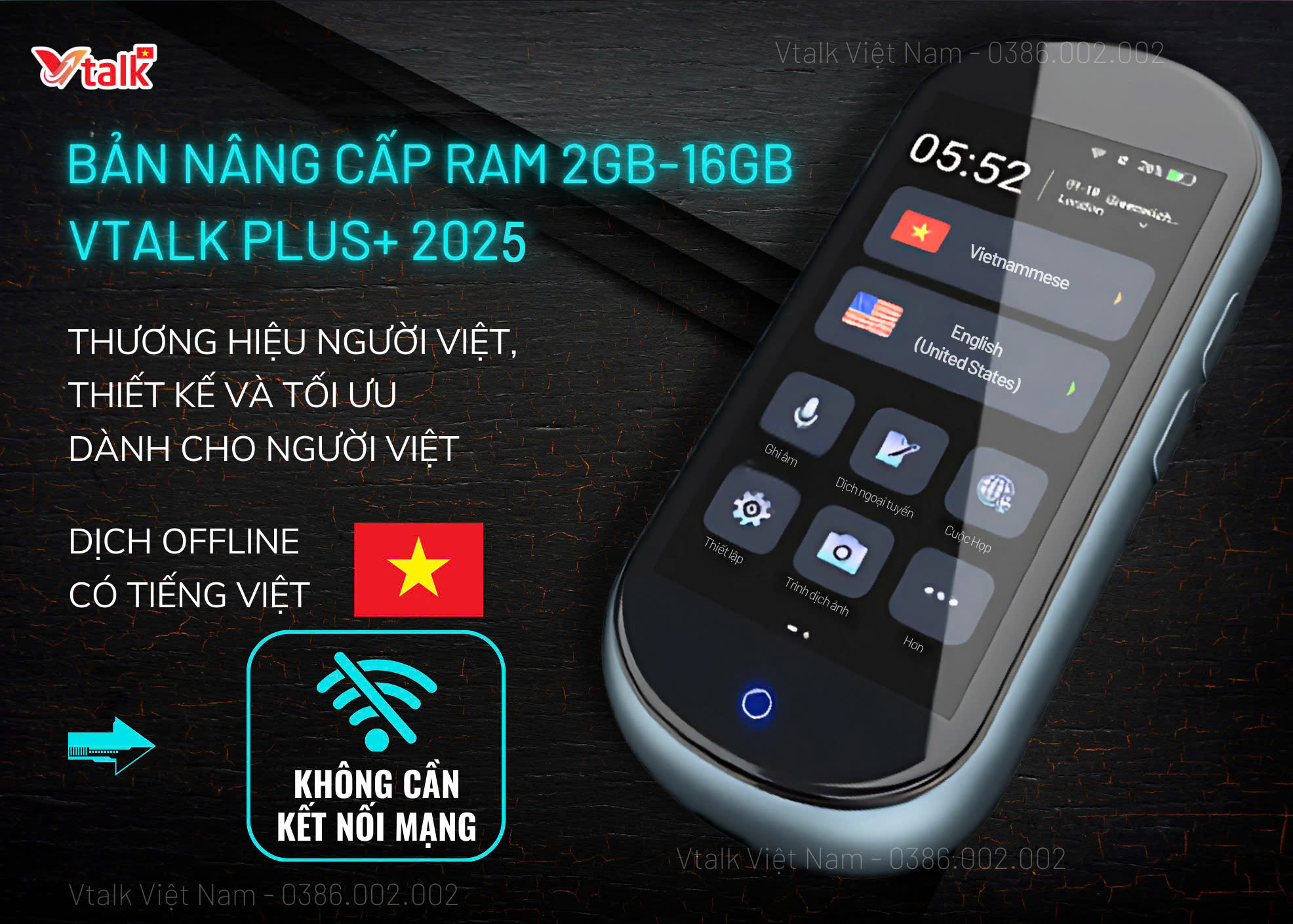
Along with the strong development of artificial intelligence (AI) technology, Translator device have become convenient tools to support multilingual communication. This device is expected to effectively and quickly solve language barriers. However, the question is: Can translation devices replace human translators? In this article, we will explore the pros and cons of translation devices and human translators, thereby providing a comprehensive view of this issue.
Advantages of translation devices
- Fast translation speed: Translation devices can instantly translate conversations or texts, helping to save time, especially in daily communication situations.
- Multilingual support:Most current translation devices support from 50 to over 100 languages, meeting global communication needs.
- Compact size: These devices are often designed to be mini, easy to carry, and can be used anytime, anywhere.
- Low cost: A translation device has a reasonable price, making it a more economical choice than hiring a translator long-term.
- AI technology application: Advanced translation devices use AI to learn context and improve accuracy over time.

Disadvantages of translation devices
- Limited context understanding: Translation devices struggle to process complex conversations containing idioms, slang, or specialized terminology.
- Emotionless translation: Unlike human interpreters, machines cannot translate emotional nuances or implied meanings in speech.
- Dependency on connection: Some devices require an internet connection to operate, causing difficulties in areas without network access.
- Translation errors: Although AI has improved significantly, translation machines can still make mistakes, especially when translating languages with complex structures.
Advantages of human interpreters
- Ability to understand context and culture: Interpreters not only translate language but also understand culture, customs, and implied meanings in speech.
- Flexibility in all situations: Humans can handle unexpected situations, non-verbal communication, or translate complex conversations.
- Emotional translation: Interpreters can convey emotions and full meaning, especially in events such as seminars, business negotiations, or political speeches.
- Not dependent on technology: Human interpreters do not need batteries, internet connection, or supporting software.
Disadvantages of human interpreters
- High cost: Hiring professional interpreters is often expensive, especially for rare languages or specialized translations.
- Limited language ability: A human translator is usually only proficient in a few languages, not as diverse as a translation machine.
- Slower translation speed:Compared to machines, human translators need time to process and express the translated sentence accurately.
Translation machine vs. human translator: When to use?
Use a translation machine when:
- Everyday communication:Such as traveling, asking for directions, shopping, or simple conversations.
- Limited budget:If you need translation for a long time but don't have a large budget, a translation machine is the optimal choice.
- Common languages:Machines work better with popular languages like English, Chinese, Spanish.
Use a human translator when:
- Specialized translation:Fields like medicine, law, or technology require high accuracy that machines cannot guarantee.
- Important events:Conferences, negotiations, or official events require the professionalism and flexibility of a human.
- Complex context:When communication requires a deep understanding of culture and context.
The future of translation machines and human translators
- Translation machines are becoming smarter: With the development of artificial intelligence and machine learning, translation machines will increasingly understand context and translate more accurately. Companies like Google, Microsoft, and Amazon are investing heavily in this field.
- Human translators still cannot be completely replaced: Despite technological advancements, the human ability to understand emotions, culture, and interact flexibly is still something machines struggle to achieve.
- The combination of machines and humans: In the future, translation machines and human translators can complement each other to enhance the efficiency and quality of translation.
Conclusion
Mini translator is a useful tool that helps quickly address multilingual communication needs in daily life. However, for situations requiring high flexibility, accuracy, and deep contextual understanding, human translators remain the optimal choice. The development of technology promises to bring more comprehensive solutions, but currently, combining machines and humans is the best way to overcome language barriers.