
 English
  Tiếng Việt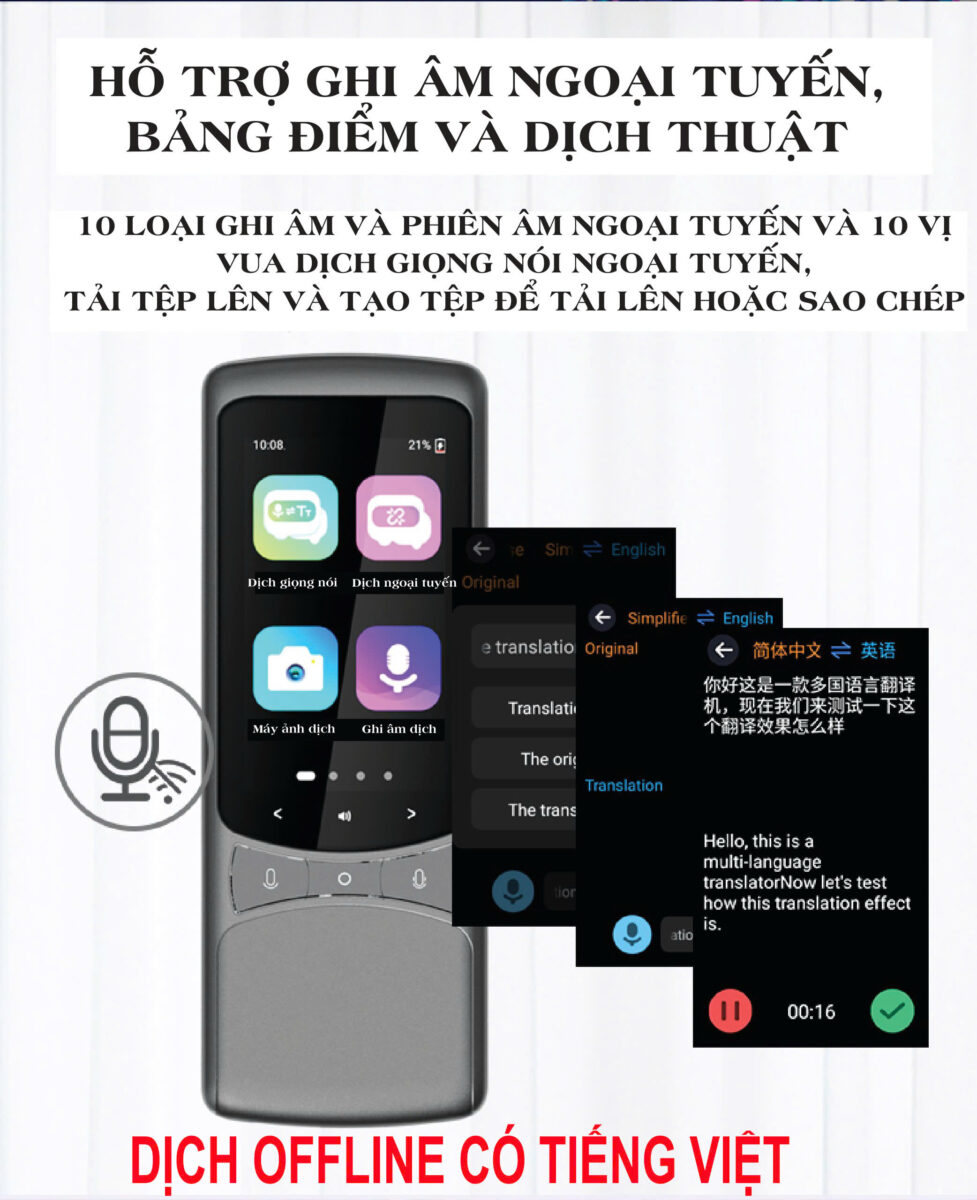
1. Translation Device
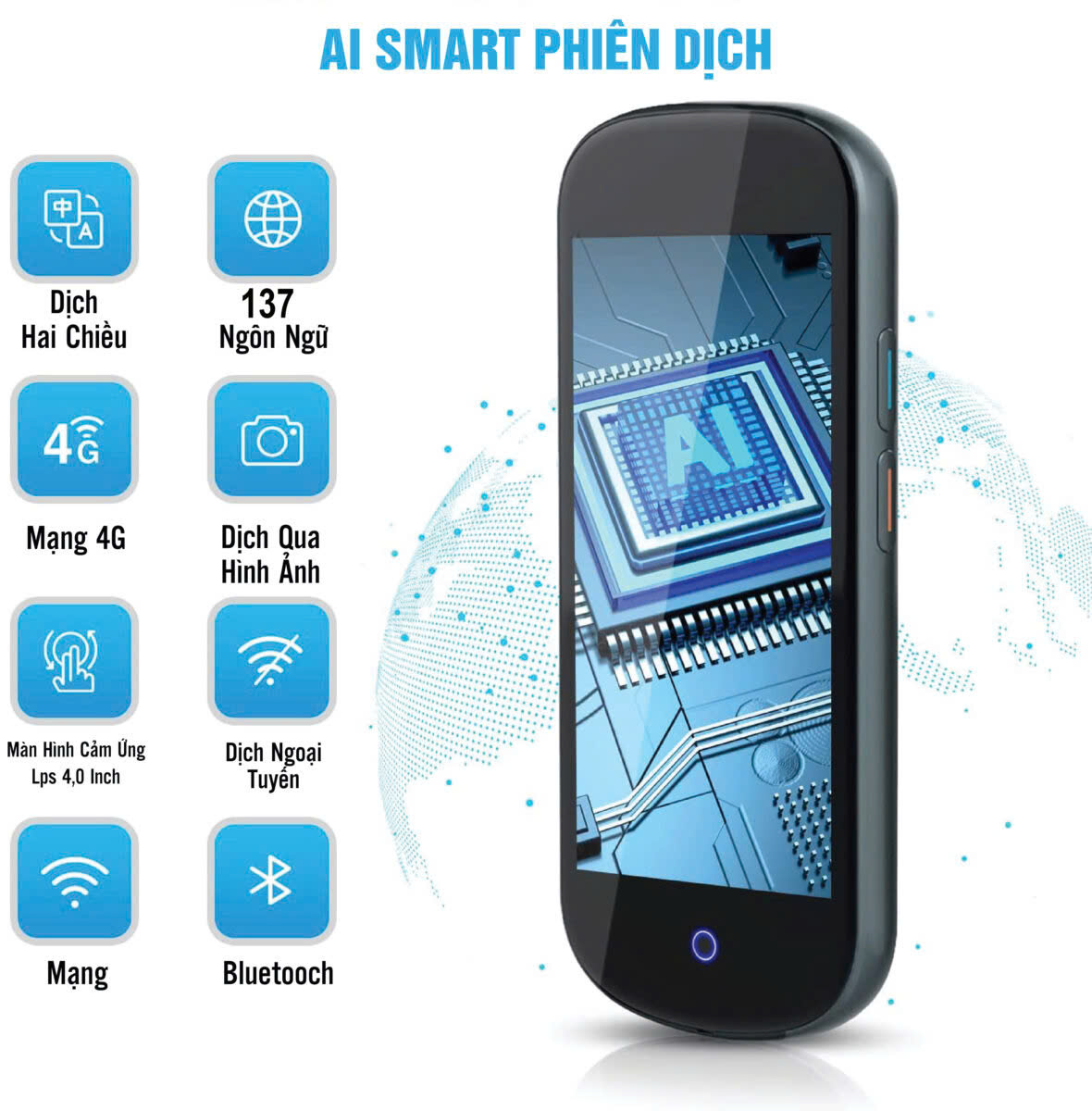
A translation device is an electronic device designed to help users translate languages directly, easily and quickly. By integrating speech recognition technology, the translation device can directly translate spoken words into the desired language. Some current translation device models can also translate text and images via camera.
Features of a Translation Device
- Compact Size: Translation devices often have a compact design, making them easy to carry, perfect for travel or business trips.
- Real-time Language Translation: Translation devices can recognize and translate sentences instantly, ensuring uninterrupted direct communication.
- High Accuracy: High-end translation devices have excellent contextual translation capabilities, minimizing incorrect translations or misunderstandings.
- Diverse Features: Some translation devices can also translate via camera, supporting text, image or video translation.
Advantages of a Translation Device
- High Accuracy: Translation devices often use algorithms and databases optimized for language translation, providing higher accuracy.
- Reliability When Traveling: A translation device helps users communicate with locals without having to worry about language barriers. This is especially useful in situations where quick information is needed.
- Independent Operation: Translation devices do not require an internet connection to operate (depending on the model), which is very convenient in areas without network.
2. Translation Apps
Translation apps are software installed on smartphones or tablets, capable of translating text, voice, and even images via camera. Some popular translation apps today, such as Google Translate, iTranslate, Microsoft Translator, etc., have become indispensable tools for those who need to communicate with foreigners.
Features of Translation Apps
- Translate Text, Voice, and Images: Current translation apps can translate various types of data such as text, voice, and even images captured from a camera.
- Easy to Download and Use: Users just need to download the app to their phone and install it quickly, without needing to invest in expensive additional devices.
- Smart Features: Translation apps can learn from users, improving translation accuracy with each use.
Advantages of Translation Apps
- Free or Low Cost: Most translation apps are free or have very low fees, making them accessible to everyone.
- Easy to Download and Update: Translation apps are continuously improved and updated to enhance performance and accuracy.
- High Flexibility: Users can use translation apps anytime and anywhere, as long as there is an internet connection.
Disadvantages of Translation Apps
- Dependent on Internet Connection: Most translation apps require an internet connection to use, which can be difficult in areas without network access.
- Lower Accuracy: Although greatly improved, translation apps can still make errors when translating long or complex sentences, especially in difficult contexts.
- No Real-Time Translation Support: Although some apps support voice translation, real-time translation from conversations still has many limitations compared to a translation device.
3. Translator Devices vs. Translation Apps Comparison
Regarding Accuracy
Translator devices are often optimized to provide higher accuracy than translation apps, especially when translating in direct communication situations. High-end translator devices use advanced voice recognition technology and better contextual translation algorithms, helping to minimize translation errors.
Translation apps, despite significant improvements, can still struggle with translating complex sentences or specific contexts. This sometimes leads to inaccurate translations, causing misunderstandings.
Regarding Convenience
Translation apps are more accessible as they only need to be downloaded and installed on a phone. Additionally, apps can translate on various devices such as phones, tablets, and computers.
Although translator devices are convenient and easy to carry, you need to spend a significant amount of money to own a quality device. Compared to apps, translator devices have lower convenience in terms of price and flexibility.
Regarding Cost
Translation apps are often free or have very low fees. Most translation services within the app can be used immediately after downloading. This helps users save costs, especially for those who only need translation in common situations.
Meanwhile, translator devices are quite expensive, especially models that support multiple languages and modern features. Investing in a translator device is only truly worthwhile when you need translation in special situations or for long-term use.
4. Which Option Is Optimal?
For Short-Term Travelers
If you only need a translation tool for short-term travel, a translation app might be the optimal choice. Free or low-cost apps will help you easily translate from text to voice without needing to invest a large sum of money.
For Those Who Need Accurate and Continuous Translation
If you frequently communicate with foreigners or participate in international meetings, a translation device might be a better choice. Especially if you want to translate accurately in direct communication situations, a translation device will be a reliable tool.
For Work Professionals
If your job requires translating many documents or supporting language translation for an extended period, a translation device with advanced features will be the optimal choice. However, translation apps can also be a helpful tool in flexible situations that do not require absolute accuracy.
Conclusion
The choice between a translation device and a translation app depends on each person's needs and purpose of use. Translation devices are suitable for those who need an accurate and efficient translation tool in direct communication situations. Meanwhile, translation apps are a convenient, cost-effective option